Tomorrow is investable.
Invest through mutual funds in AI, space technology and global markets, all from one app.
Wealthier charges no account fee and earns commission from fund houses on regular plans.
Ways to invest
Invest in the ideas shaping the next decade.
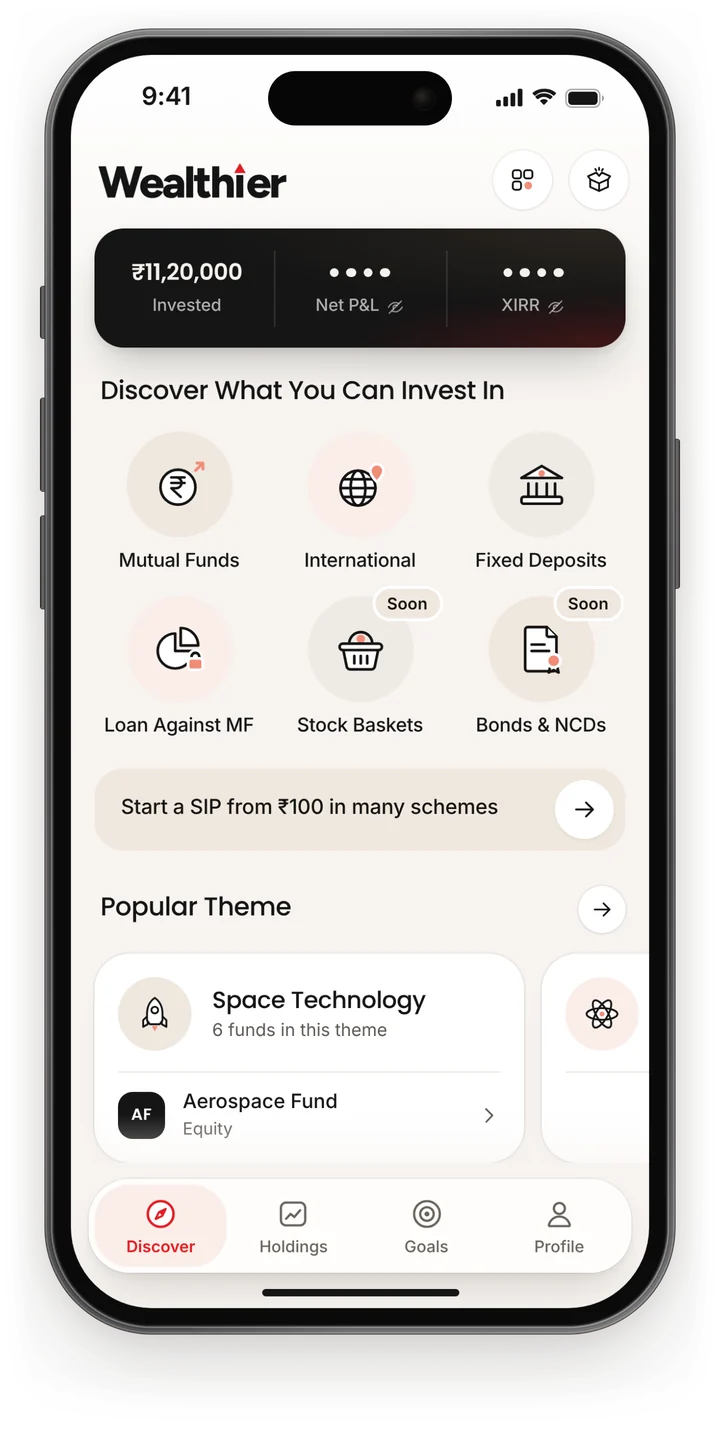
Theme collections and international funds are available today, and stock baskets, portfolios of the big bulls and Wealthier AI are launching soon.
-
Theme
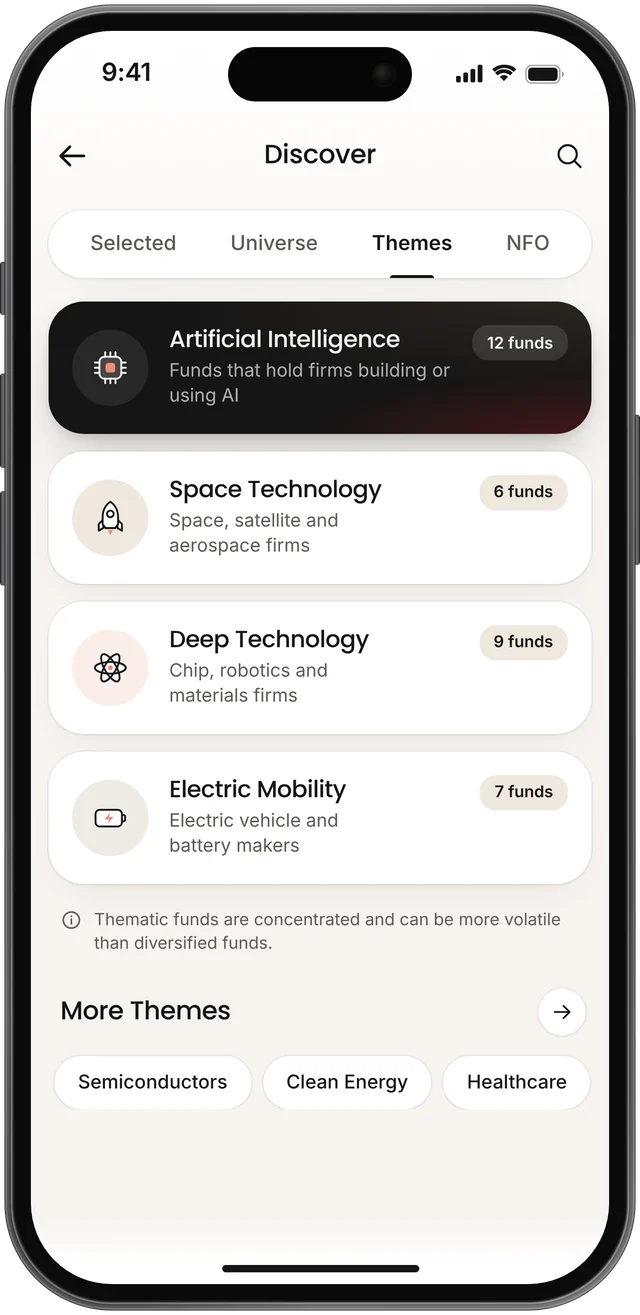
Artificial intelligence
Funds in this theme hold companies that develop artificial intelligence or apply it across their businesses.
Start investing
-
Theme
Space technology
Funds in this theme include aerospace and satellite companies among their holdings.
Start investing
-
Theme
Deep technology
Funds in this theme hold companies that design semiconductors and build robots.
Start investing
-
Theme
Electric mobility
Funds in this theme hold the makers of electric vehicles and of the batteries that power them.
Start investing
-
Global
Global markets
International funds let you invest, in rupees, in companies listed in the United States, China, Japan and Europe.
Start investing
-
Launching soon
Stock baskets
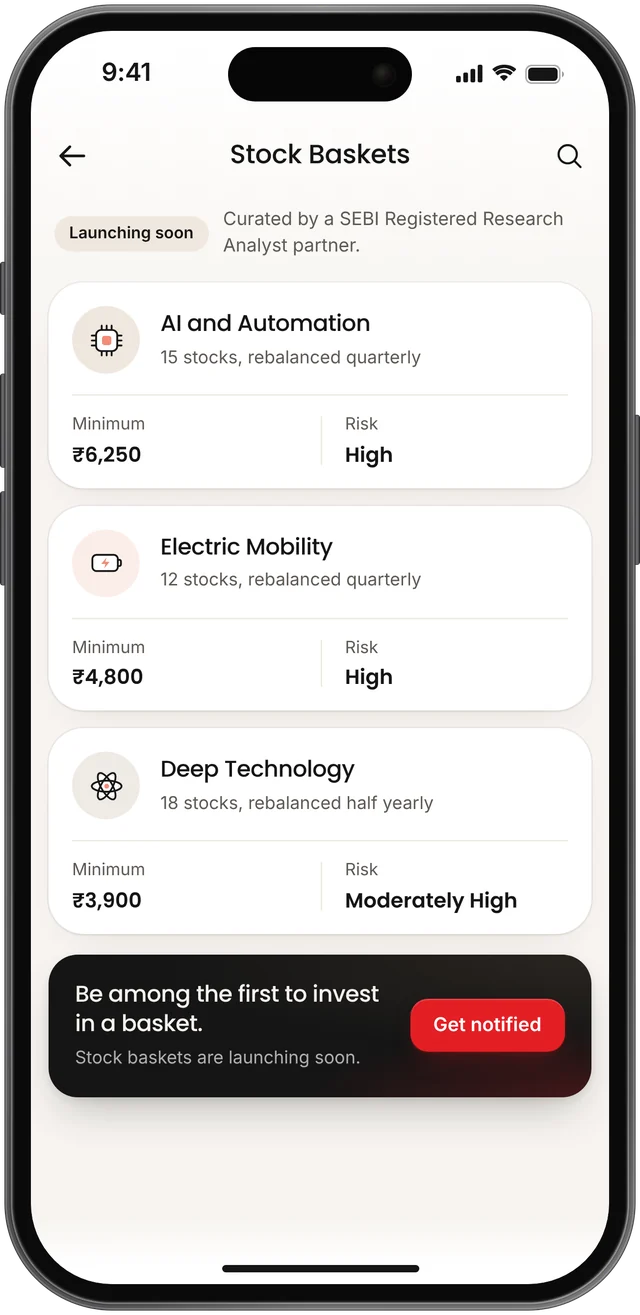
Each basket will hold a set of stocks built around one theme and curated by a SEBI Registered Research Analyst partner.
Get early access
-
Launching soon
Portfolios of the big bulls
You will be able to study the holdings of renowned investors, compiled from their public disclosures.
Get early access
-
Launching soon
Wealthier AI
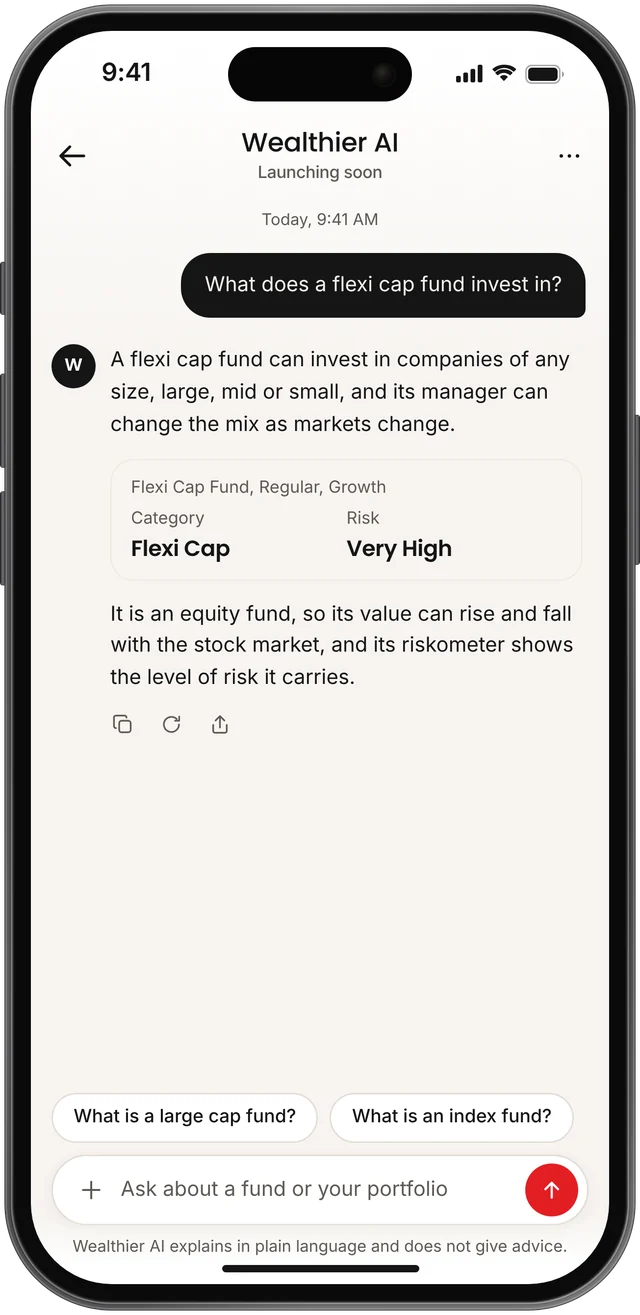
Wealthier AI will explain a fund, its category and its scheme documents in plain language.
Get early access
Thematic funds are concentrated and can be more volatile than diversified funds. Read the disclosures
Inside the app
One app for every investment.
Your mutual funds, New Fund Offers, corporate fixed deposits and goals sit together in one place.
Compare funds before you commit.
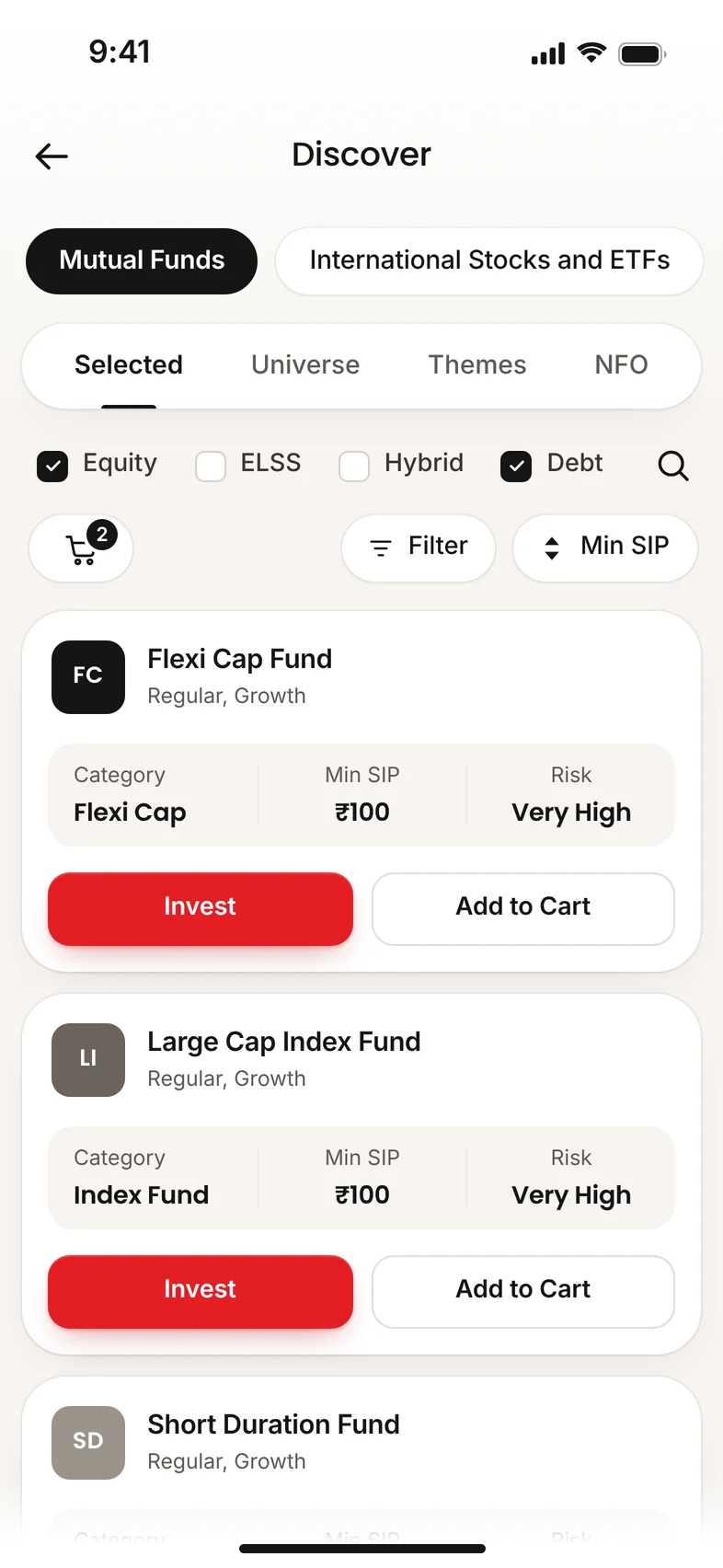
Filter funds by category, compare each fund's minimum SIP and risk level, and invest in one fund or add several to your cart.
Follow New Fund Offers as they open.
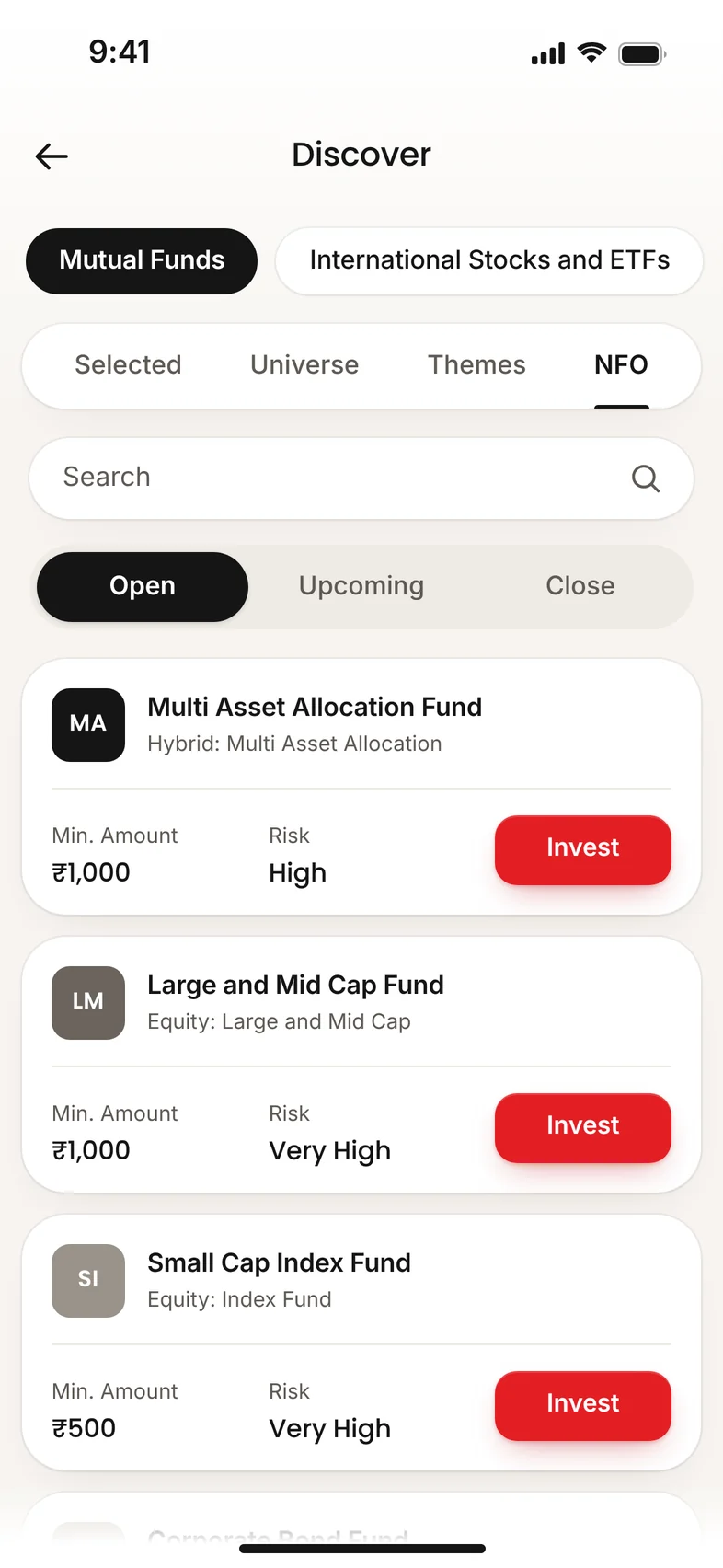
The NFO tab shows the category, minimum amount and risk level of each offer from the fund houses available on Wealthier.
Compare corporate deposits by rate and rating.
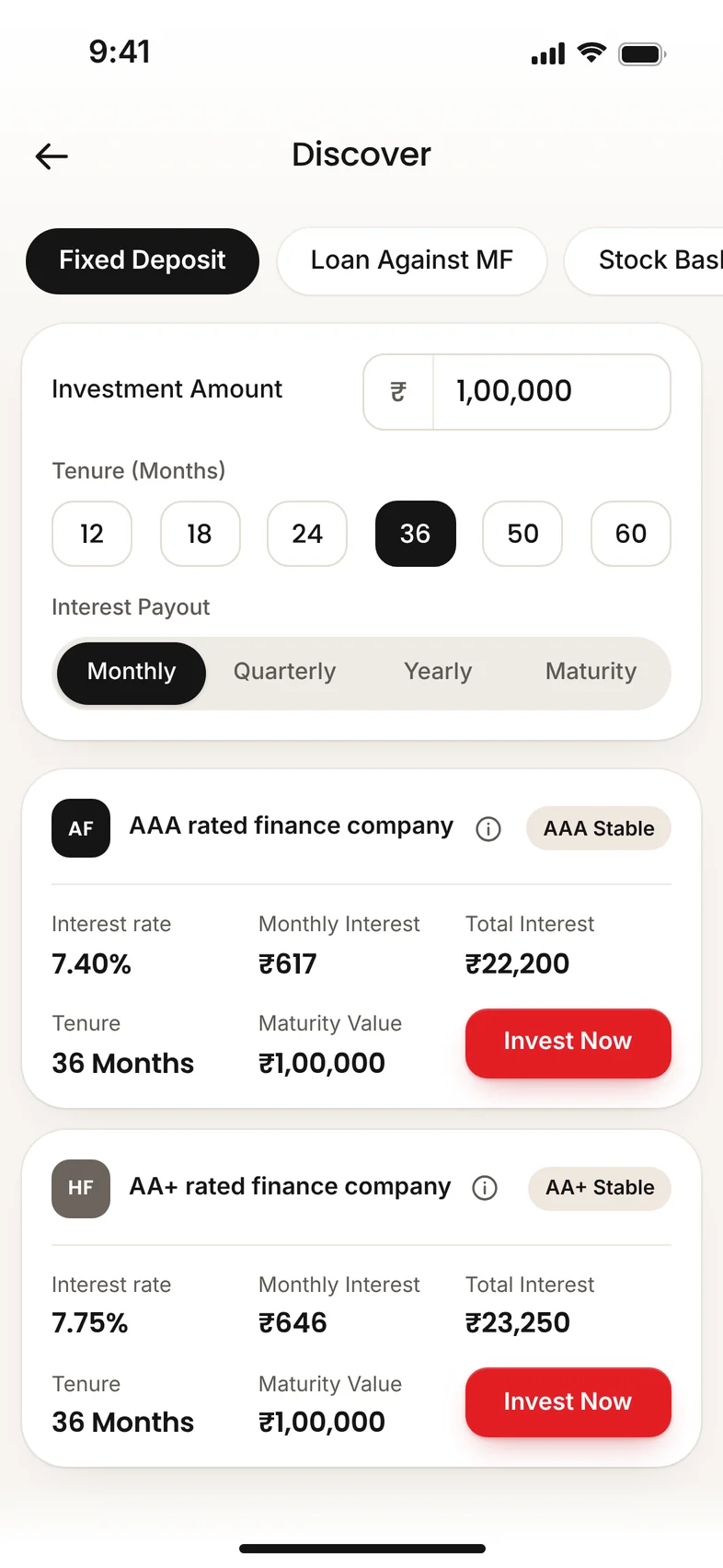
Enter an amount, a tenure and a payout choice, and each issuer's card sets its rate beside its credit rating and shows the maturity value.
Corporate fixed deposits are not bank deposits and are not covered by DICGC insurance.
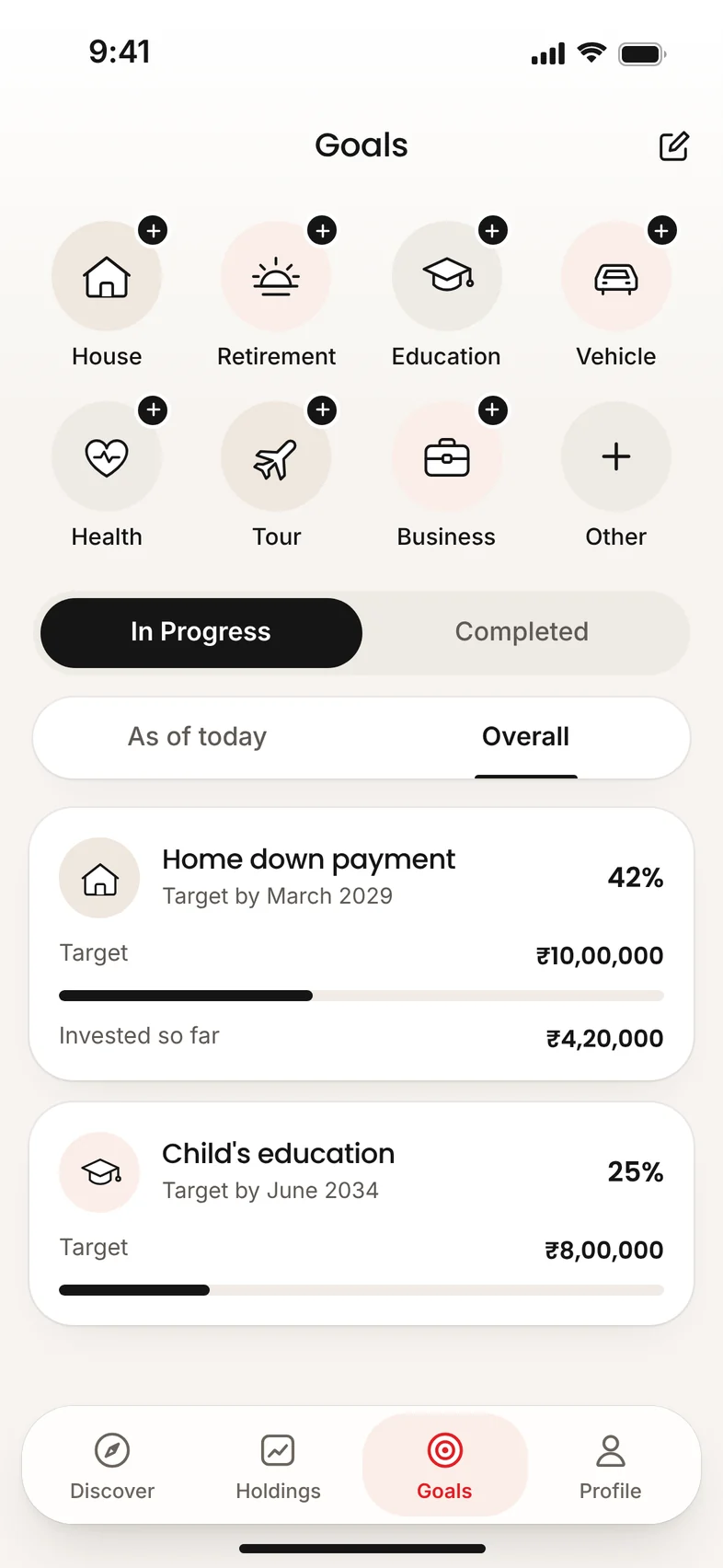
Give every goal a target and a date.
The Goals tab holds each goal you set, such as a home, a child's education or retirement, and shows the amount invested towards its target.

Loans and calculators
Borrow against your funds without selling them.
Borrow against eligible mutual funds when you need cash, and use the calculators in the app to plan the monthly SIP that each goal requires.
Loans against mutual funds
An RBI regulated lender sets the amount you can draw against the funds you pledge, and the pledge is released once the loan is repaid.
SIP calculator
Move the sliders to see what a monthly SIP could add up to at a rate you choose.
Explore calculators in the app₹100 to ₹1,00,000 a month
1 to 40 years
1% to 15% a year
This estimate assumes a return of 10% a year, which is illustrative, is not guaranteed and does not represent the return of any scheme.
Early access
More is on the way.
Open your account today to be among the first to use each of these features as it launches.
Launching soon
Bonds, your own portfolios and more
Bonds and NCDs
A SEBI Registered Online Bond Platform Provider partner will offer listed bonds and NCDs, which you can compare by yield, rating and maturity.
Your own portfolios
You will be able to assemble a portfolio of your own from the funds, deposits and baskets you select.
Funds you hold elsewhere
Mutual funds held on other platforms will appear beside your Wealthier holdings once you choose to share their statements.
Launching soon
US stocks and ETFs
Shares and ETFs listed in the United States will be available through a regulated partner, and each remittance will be made under the Liberalised Remittance Scheme.
Wealth Health Checkup
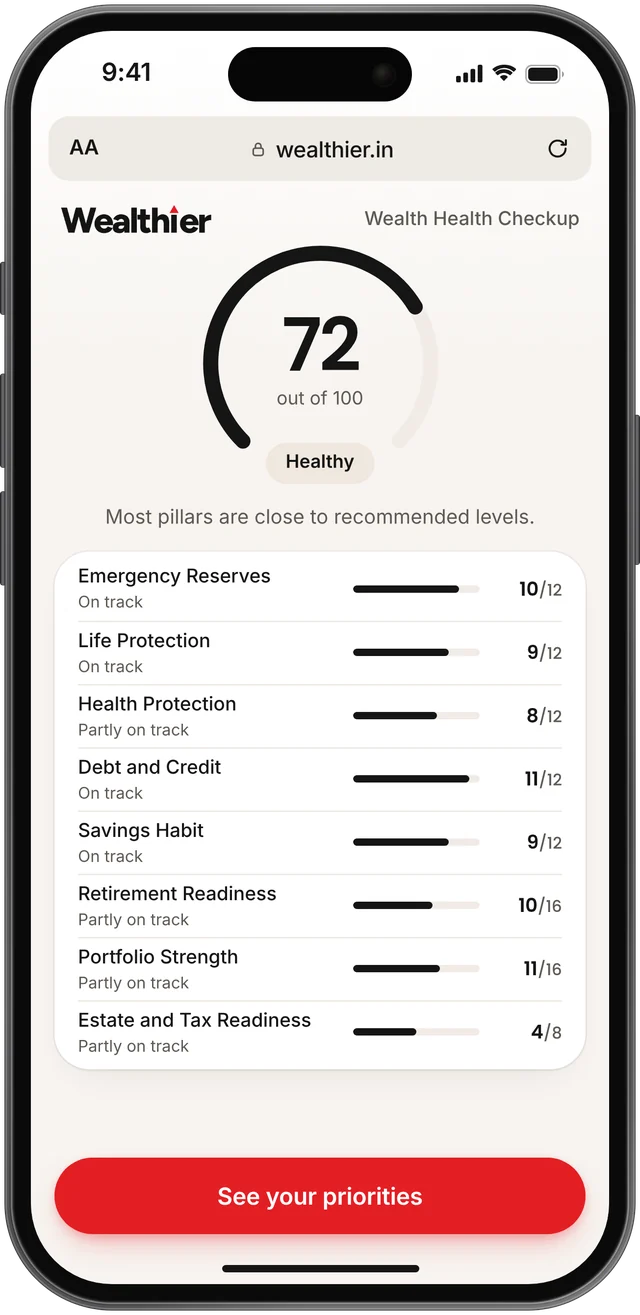
Know where you stand.
In about three minutes, the free Wealth Health Checkup scores your finances out of 100 across eight pillars, and every question asks only for a range, never an exact amount.
No account, PAN or bank details are needed, and your answers stay in your browser. The result is for education only and is not investment advice.
The Wealthier Daily
Understand the markets in a few minutes each morning.
Each story takes one development in markets, policy or personal finance and explains it in plain English. A short summary of each story is also posted to The Wealthier Daily channel on WhatsApp.
Before you begin
Questions investors ask first.
Any question not answered here can be sent to hello@wealthier.in.
Do you need to complete KYC again to open a Wealthier account?
If your Know Your Customer (KYC) record has already been validated by a KYC Registration Agency, it can usually be reused, and you need not complete KYC again. Opening a Wealthier account requires your PAN, mobile number, email address and bank details, and your identity and bank account are verified digitally. You can invest as soon as verification is complete.
Can you pause, increase or stop a SIP after it starts?
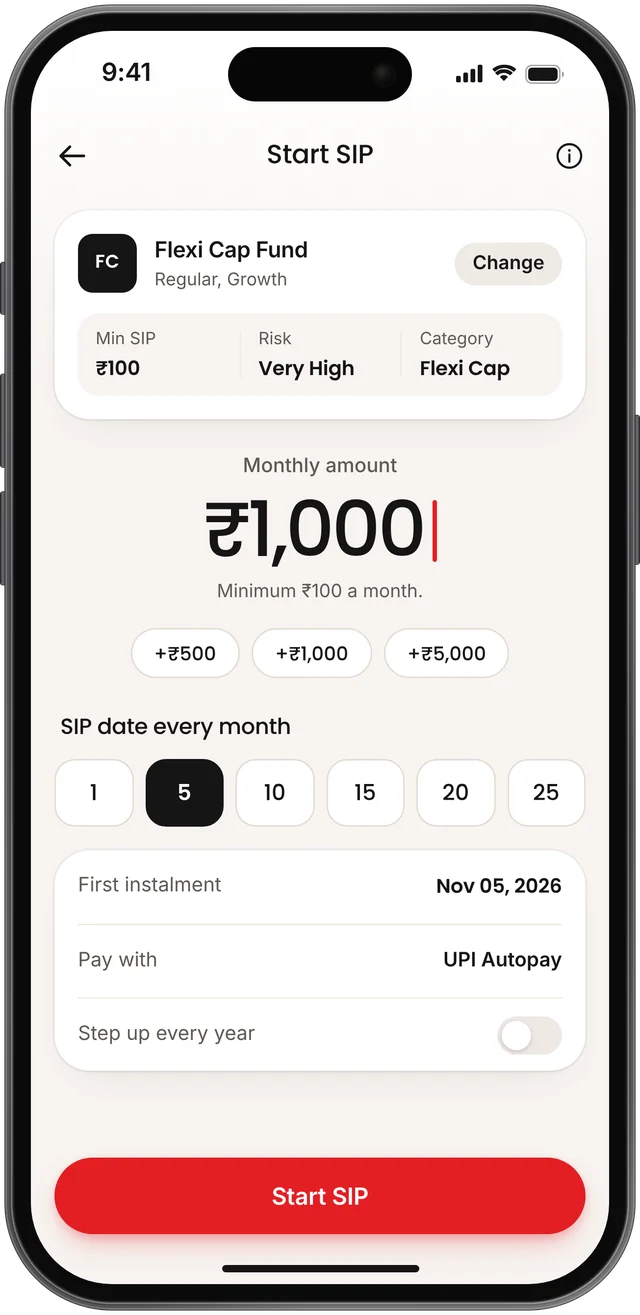
You can stop a SIP whenever you choose, and the units it has already bought stay invested. Many fund houses also let you pause a SIP for a few months, which helps through a period of tight cash flow. To invest more, you can start a second SIP or, where the scheme offers it, choose a step up that raises the instalment by a set amount each year.
Does a SIP remove the risk of investing at a market peak?
A SIP spreads your investment across many dates, so each instalment buys more units when prices are low and fewer when they are high, and no single day sets your average cost. Your units still rise and fall in value with the market, so a SIP reduces the effect of timing without removing market risk. Its greater strength is discipline, because the same amount is invested every month whatever the market is doing.
Does a thematic fund carry more risk than a diversified fund?
A thematic fund concentrates on one idea, such as artificial intelligence or electric mobility, so a setback in that area affects the whole fund, and a theme can stay out of favour for years. Many investors therefore build the core of a portfolio from diversified equity and debt funds and hold themes as a smaller allocation around it. The theme collections in the Wealthier app list the funds behind each idea together, so you can compare them before you decide how much to commit.
Is a New Fund Offer worth considering without a track record?
A New Fund Offer can be worth considering, provided it is judged on its investment objective and strategy, the experience of the fund house and the fund manager, and the costs set out in its scheme documents. The more useful question is whether the new fund adds something to your portfolio that your existing funds do not already provide.
Does a higher rate on a corporate fixed deposit mean higher risk?
A deposit rate reflects what the issuer must pay to borrow, so a higher rate often accompanies a lower credit rating or a longer tenure. The rate is best read beside the rating that an independent credit rating agency assigns, which indicates the issuer's ability to repay. Spreading a larger sum across several issuers and tenures also limits how much depends on any one of them.
Can you withdraw from a mutual fund on any business day?
Units of open ended schemes can be redeemed on any business day, and SEBI rules require most schemes to pay the proceeds into your registered bank account within three working days. Tax saving ELSS funds lock in each instalment for three years, and retirement and children's funds carry a lock in of at least five years, or until retirement age or the child's majority if that comes sooner. Closed ended schemes repay at maturity, and until then their units can be sold only on the stock exchange where they are listed.
Is a loan against mutual funds better than selling them?
The answer depends mainly on how long you need the money. Selling ends the investment and may create a capital gains tax liability, while a loan keeps your units invested in return for interest on the amount you draw. If the value of the pledged units falls, however, the lender can ask for more security or sell units, so a loan generally suits a short term need that can be repaid soon, and a redemption suits money that is needed permanently.
Start with
one idea.
Open your account and build a portfolio around the ideas you believe in, from artificial intelligence and space technology to global markets.